
01 / About Flowboard
The problem behind the product
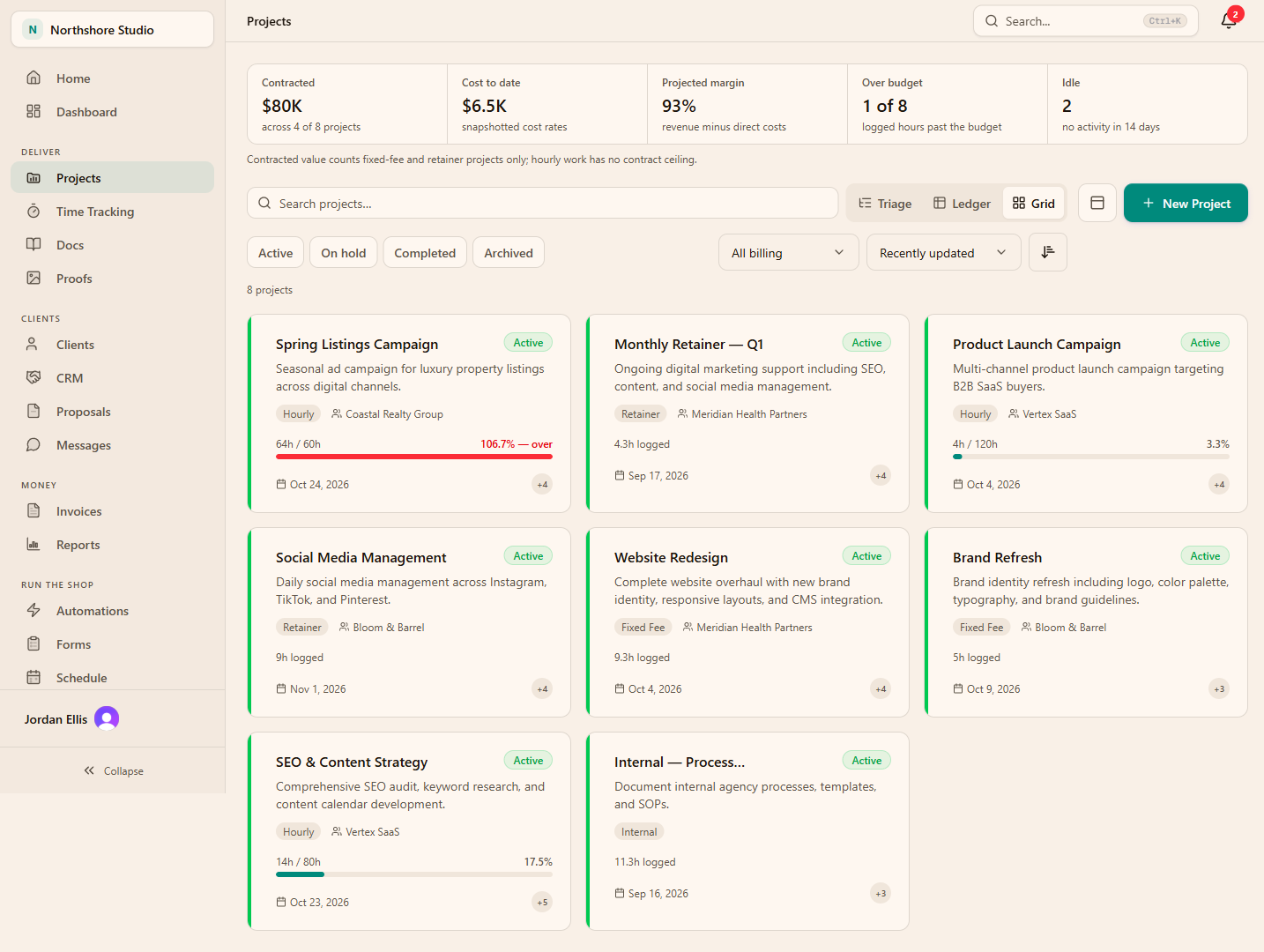
Flowboard grew out of running an agency and repeatedly connecting project work, time records, invoices, and budget spreadsheets by hand. Each system held part of the picture, while the owner still had to reconstruct the engagement to answer a simple question: what is happening, and what is it costing us?
That problem shapes the product's priorities. A task should sit in a recognizable project. A project should belong to a client relationship. Recorded effort should help explain direct delivery cost and support billing where appropriate. Client collaboration should have an intentional external experience instead of requiring every client to navigate the internal workspace.
02 / About Flowboard
What connected means in practice
The useful connection is between records and decisions. A won opportunity can become a project. A project holds the delivery plan and its context. Time entries can contribute to project economics and, when eligible, invoice preparation. Weekly allocations provide a separate view of the people plan. Documents and client collaboration keep the agreement and review process easier to follow.
Your team stays in control of the decisions. Choose the scope, set the client permissions, review an invoice before sending it, and configure the automations that suit your process. Flowboard brings the supporting records together so those decisions start with the project context already in view.
03 / About Flowboard
An agency operating model, with room for specialist tools
Flowboard is relevant to marketing agencies, design studios, web development teams, consultants, PR firms, video producers, social and content teams, and SEO agencies. The common thread is client work delivered by a shared team, with commitments that affect both capacity and commercial outcomes.
Keep the specialist tools your team relies on: source control for engineering, design and editing software for production, advertising and search platforms for campaign results, and accounting for the wider financial record. Flowboard connects the agency operations around that work, from the accepted scope through delivery and billing.
04 / About Flowboard
Try your next client handoff
Choose an engagement with a clear next milestone. Bring the delivery lead, the person preparing invoices, and the teammate handling client feedback into the same project. Follow the work from an agreed brief through delivery and review, then check the hours and direct cost alongside the fee.
Bring a real operating question
Choose a problem such as unclear project margin, fragmented client review, or an overloaded delivery team. Define what a better outcome would look like.
Run the full handoff
Connect the client, project, task, time, and relevant billing or review record. Check that the people involved can understand the next step.
Prepare for the wider move
Check how your existing records import, set the right client access, and connect any specialist tools the process depends on. Use what you learn to plan the rest of the agency's move.
05 / About Flowboard
Who is behind Flowboard
Flowboard is a product of Harbor Software LLC, based in Sheridan, Wyoming, USA. General product, partnership, and company questions can be sent to hello@flowboardhq.com. Product support and setup questions can be sent to support@flowboardhq.com.
Explore the feature guides to see how individual workflows fit together, or choose a use case that matches the work your agency delivers. The research library and comparison guides can help you decide which operating model fits your team. For a question specific to your setup, contact us with the workflow you want to improve.
Explore the product
See how projects, people, clients and billing fit together.
Explore this workflow ↗Explore the research
See the agency workflow problems that inform our product direction.
Explore this workflow ↗THE PRACTICAL DETAILS
Questions, answered.
Who is Flowboard designed for?
The primary focus is digital agencies with roughly five to twenty-five people managing client delivery. The workflow is most relevant when projects, shared staff, billable effort, client collaboration, and engagement economics need to be understood together.
Is Flowboard only a project-management tool?
Project delivery is one part of the workspace. Flowboard also connects client records, time, capacity, proposals, invoices, documents, intake, scheduling, and other agency workflows. Start with the part of your process that creates the most repeated work, then connect the surrounding steps.
Can we keep our specialist tools?
Yes. Keep the design, development, marketing and accounting tools that your team needs. Use Flowboard for the project plan, client context, shared capacity, time and billing around that specialist work. The integration and import guides explain the available ways to connect or move records.
Where should we start if we are considering a switch?
Choose an active engagement and include the people who manage delivery, record time, work with clients, and prepare billing. Follow its next milestone in Flowboard, then use the migration guide to plan which records to move. Check client visibility before inviting the wider team and your clients.